
Hemorrhoidal disease is nodular enlargement, inflammation and dysfunction of the blood vessels (veins) in the lower rectum and anus.
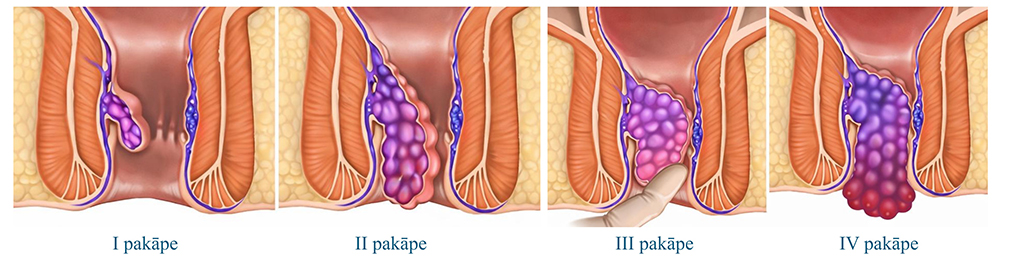
• Grade 1 – enlarged internal hemorrhoidal veins;
• Grade 2 – internal hemorrhoidal veins prolapse through the anus during defecation and then reduce spontaneously (return to their previous anatomical position);
• Grade 3 – internal hemorrhoidal veins prolapse through the anus during defecation and then require manual assistance (with a finger) to be reduced;
• Grade 4 – permanent prolapse of the internal hemorrhoidal veins.
The most common symptoms are pain in the anal canal, bleeding, itching, discharge from the rectum and irritation of the perianal skin, and formations near the anus that cause aesthetic and hygienic complaints. Hemorrhoidal disease most often presents as episodic exacerbations. As a result of a prolonged disease course, complaints may be persistent.
• bowel movement disorders – chronic constipation, prolonged sitting on the toilet, severe straining during defecation, infrequent bowel movements;
• lifestyle – prolonged sitting, a sedentary lifestyle and lack of physical activity;
• diet – insufficient fluid intake, low dietary fibre intake, excessive consumption of spicy foods or alcohol;
• increased intra-abdominal (abdominal cavity) pressure – pregnancy, childbirth, obesity, frequent lifting of heavy objects, disproportionate physical exertion, chronic cough;
• age and tissue changes – connective tissue weakness, changes in vein wall elasticity;
• other factors – genetic predisposition (heredity), chronic liver diseases.
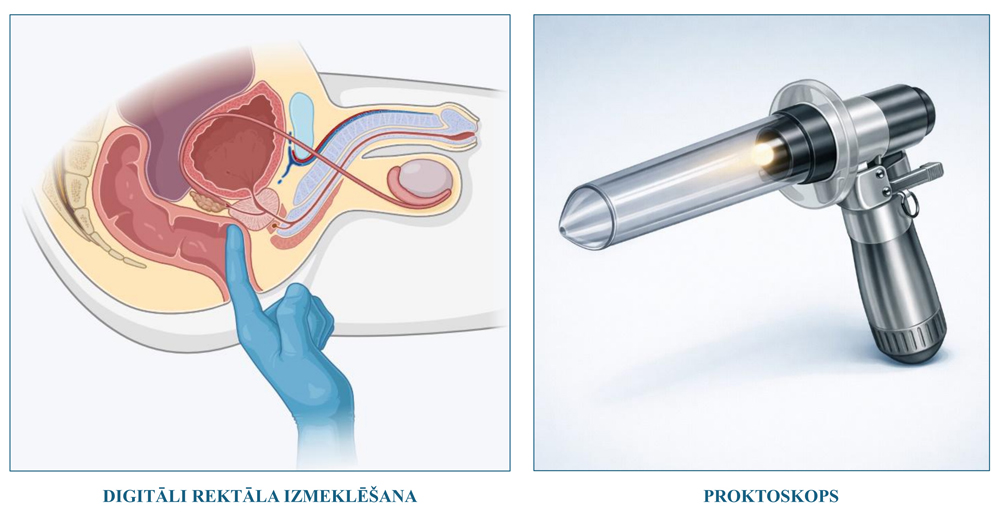
Diagnosis of hemorrhoidal disease is based mainly on clinical assessment, but it is also important to exclude other, more serious pathologies (for example, colorectal cancer). The diagnosis is established by performing a perineal inspection, digital rectal examination (finger examination) and proctoscopy (examination of the mucosa of the anal canal and rectum with an instrument) (Figure 2). The examination is not painful and also enables identification of other possible causes of the complaints.
Hemorrhoidal disease does not increase the risk of developing rectal cancer. However, it should be remembered that prolonged attribution of symptoms to known hemorrhoidal disease often delays timely diagnosis of colorectal cancer, because the presence of one pathology does not exclude another.
Treatment of hemorrhoidal disease is complex and varied. The choice of treatment is determined by the grade of hemorrhoidal disease, the nature and duration of complaints, and existing risk factors.
The method of surgical treatment for hemorrhoidal disease is determined by the physician based on the patient's complaints, objective findings, the intended surgical goal and the characteristics of the postoperative period.









CALL US:
+371 26 412 412WHATSAPP:
+371 26 412 412Consultation with an experienced doctor is the first step towards taking care of your health and well-being.
SEND US A MESSAGE