
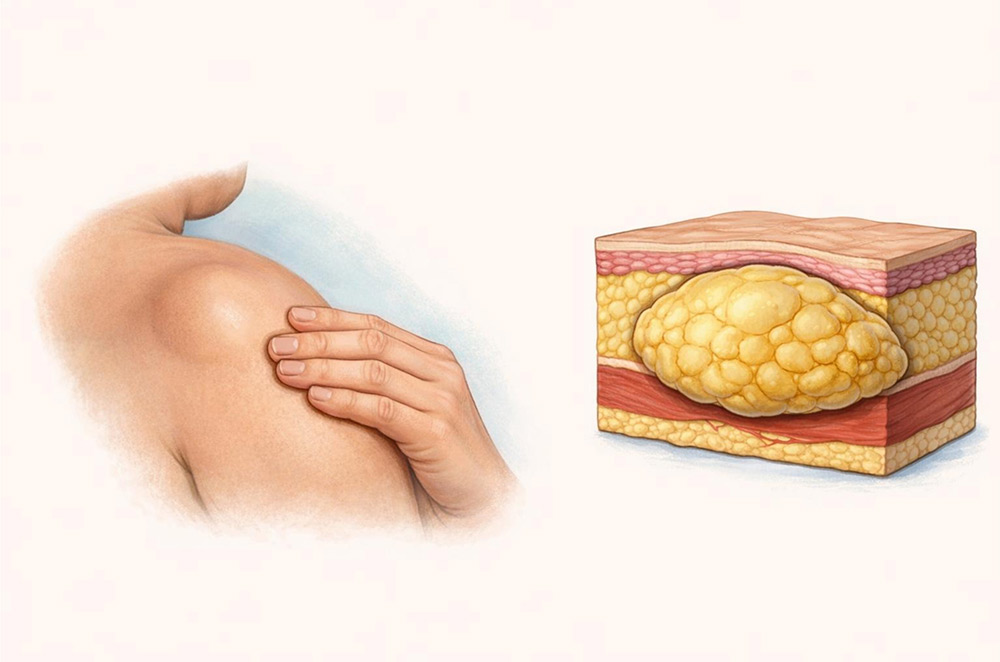
Lipoma – the most common benign subcutaneous tumour, composed of adipose tissue (Figure 1). It is soft in consistency, mobile and painless. It may be located in any part of the body.
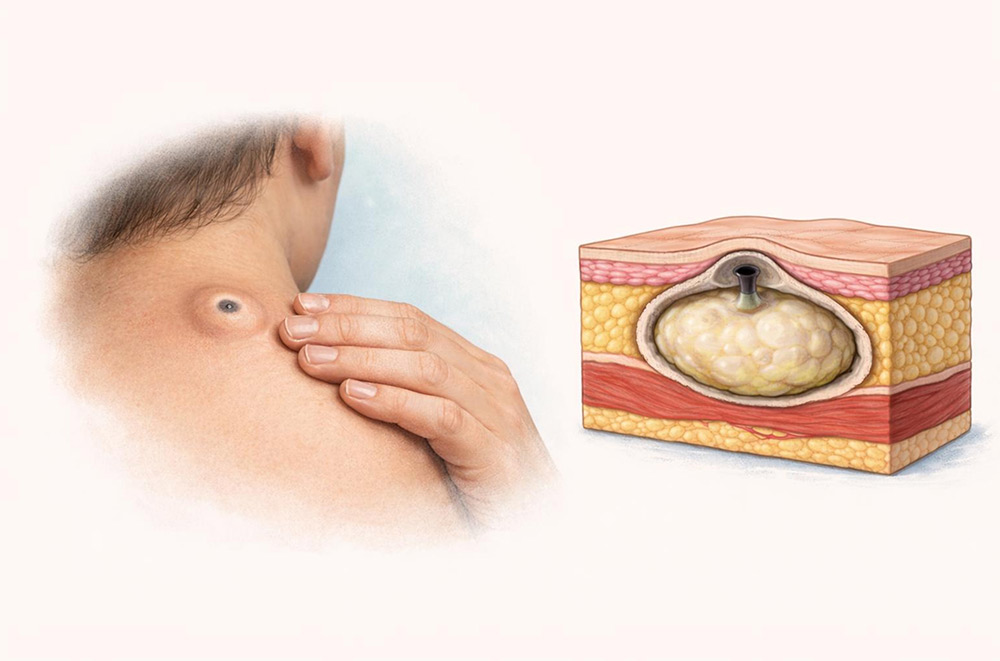
Atheroma (epidermal cyst) – forms when a skin sebaceous gland becomes obstructed (Figure 2). It may be firm or elastic, sometimes with a visible punctum in the centre of the skin lesion. It is most often located on the scalp, face or back. Inflammation may often develop, and the atheroma may suppurate, requiring urgent surgical treatment.
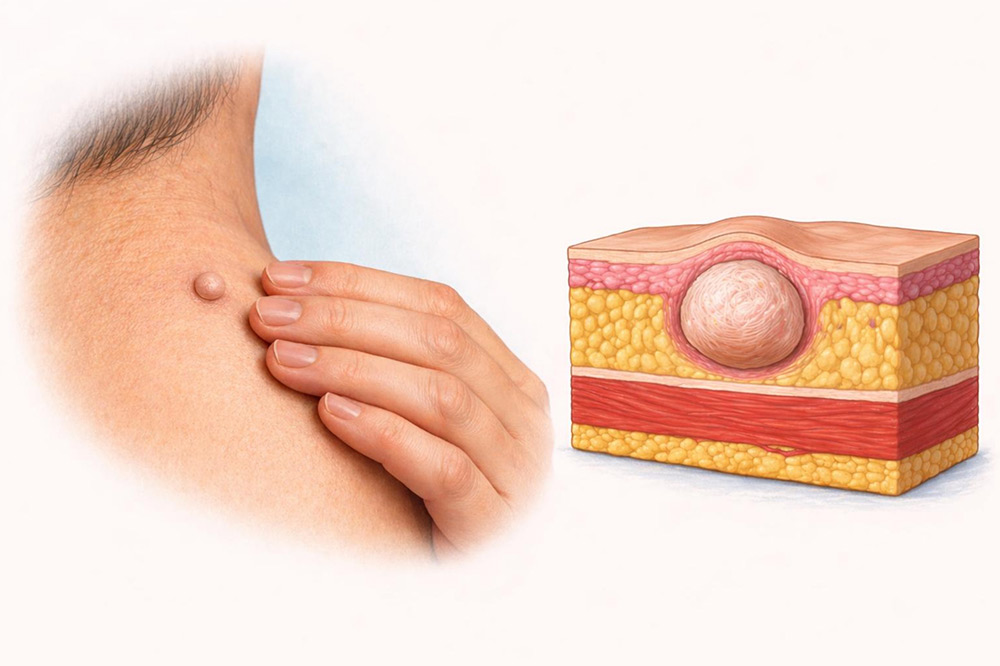
Fibroma – a dense connective tissue lesion that is usually painless and mobile, most often presenting as a small, firm nodule (Figure 3). It is most often located on the legs or arms.
Benign subcutaneous lesions usually grow slowly, are painless and do not pose a threat to health, but they may sometimes cause discomfort or cosmetic complaints.
Diagnosis of benign subcutaneous lesions is usually relatively simple, but it is important to make sure that the lesion is truly harmless. Most often, it is already possible during the examination to determine whether it is, for example, a lipoma, atheroma or fibroma. In cases where it is necessary to clarify the structure of the lesion or its relationship to surrounding tissues, an ultrasound (US) examination is performed.
Treatment of benign subcutaneous lesions is surgical. In most cases, the procedures can be performed under local anaesthesia.









CALL US:
+371 26 412 412WHATSAPP:
+371 26 412 412Consultation with an experienced doctor is the first step towards taking care of your health and well-being.
SEND US A MESSAGE