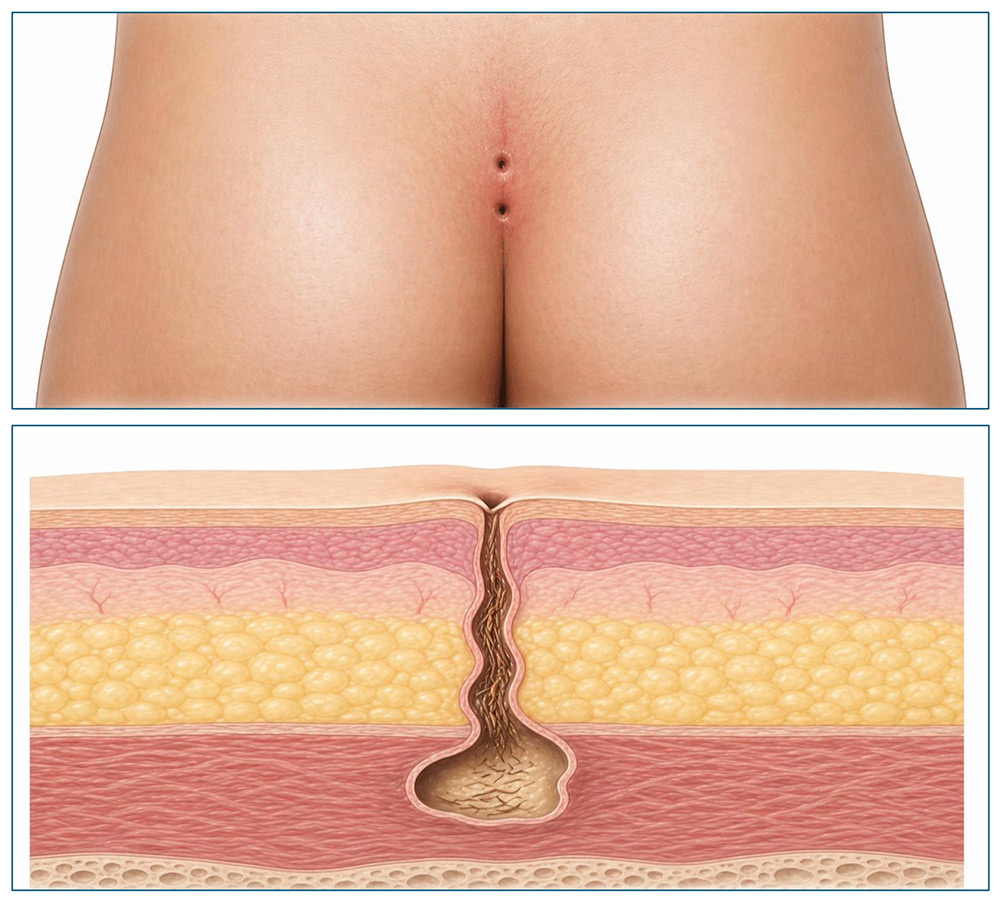
Pilonidal sinus is a chronic inflammatory process localized in the intergluteal cleft (between the "buttocks") in the sacral and coccygeal region. It is an acquired disease based on ingrowth of hairs into the skin and the development of chronic inflammation (Figure 1).
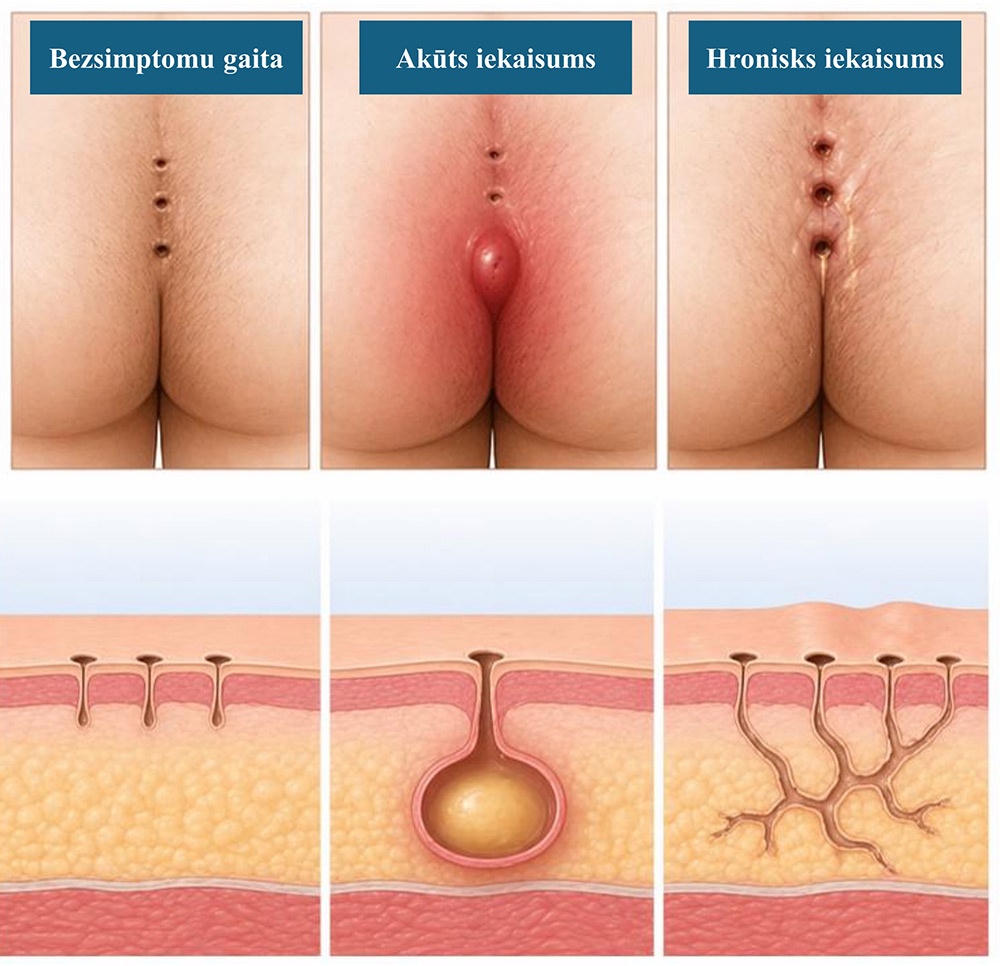
Symptoms of pilonidal sinus depend on the disease course, which may be asymptomatic, acute or chronic (Figure 2). The most common complaints are visible skin openings in the coccygeal region and discomfort or pain that worsens when sitting. In acute infection, swelling and redness develop; severe pain and elevated temperature are characteristic, associated with formation of a soft-tissue suppuration (abscess), in which urgent drainage is required (making an incision to allow pus to drain). In chronic inflammation, additional tracts or cavities often form in the soft tissues, which may cause extensive changes (scarring and deformation), and foul-smelling discharge from the skin openings is characteristic.
The diagnosis is made clinically by inspection, because the disease has a characteristic appearance. In individual cases, if there are doubts about the diagnosis (differentiation from a rectal fistula or suppurative skin diseases is required) or if there is recurrence of the disease – ultrasonography (US) is performed.
A prolonged disease course results in an extensive soft-tissue defect, which not only affects the choice of surgical treatment but also increases the risk of disease recurrence. A chronic disease course is associated with hygienic difficulties and also emotional discomfort.
In pilonidal sinus, the only treatment is surgical.
One of the essential factors in reducing the risk of disease recurrence is postoperative aftercare – regular hygiene, hair control (laser hair removal is preferable), weight correction and avoidance of prolonged sitting in the early period.









CALL US:
+371 26 412 412WHATSAPP:
+371 26 412 412Consultation with an experienced doctor is the first step towards taking care of your health and well-being.
SEND US A MESSAGE