We help you regain your health and quality of life by treating various gynaecological conditions. Our experienced specialists provide a personalised approach, guided by the latest medical standards and gentle treatment methods.
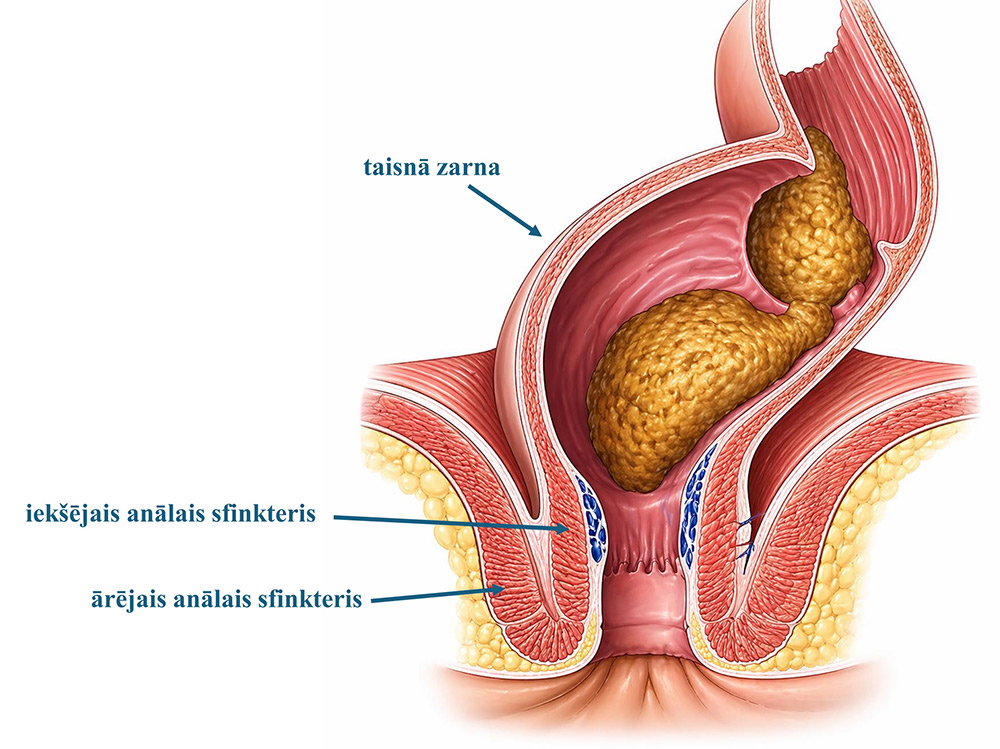
An anal sphincter defect is damage or insufficiency of the internal and/or external anal sphincter muscle that interferes with the normal closing function of the anal canal (Figure 1). It may be structural (tear, scar tissue) or functional (innervation disorders) and most often occurs as a result of birth trauma, surgical procedures or injuries.
Figure 1. Anatomy of the anal sphincter
What are the symptoms of an anal sphincter defect?
Symptom severity depends on the extent of the damage; however, in most cases at least one of the following is characteristic:
fecal incontinence (partial or complete);
flatus incontinence;
urgent need to defecate and inability to hold bowel movements;
a feeling of uncleanliness or soiling after defecation;
discomfort in the anal area or skin irritation.
What contributes to the development of a structural anal sphincter defect?
Diagnosis is based on clinical assessment (symptom assessment, physical examination) and specific investigations – transrectal ultrasonography (to assess structural defects) and sphincter manometry (to assess sphincter function) are performed.
What complications can an anal sphincter defect cause?
An untreated defect may cause:
progressive fecal incontinence;
social isolation and impairment of quality of life;
dermatitis and skin damage in the anal area;
psychological problems (anxiety, depression);
progressive pelvic floor dysfunction.
What is the treatment of an anal sphincter defect?
Treatment is individual and depends on the severity of the damage, but it mainly includes three principal approaches:
This website uses strictly necessary cookies to function. With your consent, statistical and social media cookies may also be used on this site.
Funkcionāls
Always active
Tehniskā glabāšana vai piekļuve ir noteikti nepieciešama leģitīmam mērķim, lai ļautu izmantot konkrētu pakalpojumu, ko skaidri pieprasījis abonents vai lietotājs, vai tikai ar mērķi veikt sakaru pārraidi elektronisko sakaru tīklā.
Settings
Tehniskā glabāšana vai piekļuve ir nepieciešama leģitīmam mērķim saglabāt preferences, kuras nav pieprasījis abonents vai lietotājs.
Statistika
The technical storage or access that is used exclusively for statistical purposes.Tehniskā krātuve vai piekļuve, kas tiek izmantota tikai anonīmiem statistikas nolūkiem. Bez tiesas pavēstes, jūsu interneta pakalpojumu sniedzēja brīvprātīgas atbilstības vai papildu ierakstiem no trešās puses, informāciju, kas tiek glabāta vai izgūta tikai šim nolūkam, parasti nevar izmantot, lai jūs identificētu.
Mārketings
Tehniskā uzglabāšana vai piekļuve ir nepieciešama, lai izveidotu lietotāju profilus reklāmas nosūtīšanai vai lai izsekotu lietotāja darbībām tīmekļa vietnē vai vairākās tīmekļa vietnēs līdzīgiem mārketinga mērķiem.