
An anal polyp is a benign mucosal growth in the anal canal or the lower part of the rectum (Figure 1). Most often these polyps are inflammatory in nature (arising as a result of chronic irritation), hyperplastic (formed during the process of mucosal cell division) or adenomatous (with potential for malignant transformation). In clinical practice, the term “anal polyp” sometimes also denotes a hypertrophied (enlarged) anal papilla or mucosal elevation associated with a chronic anal fissure.
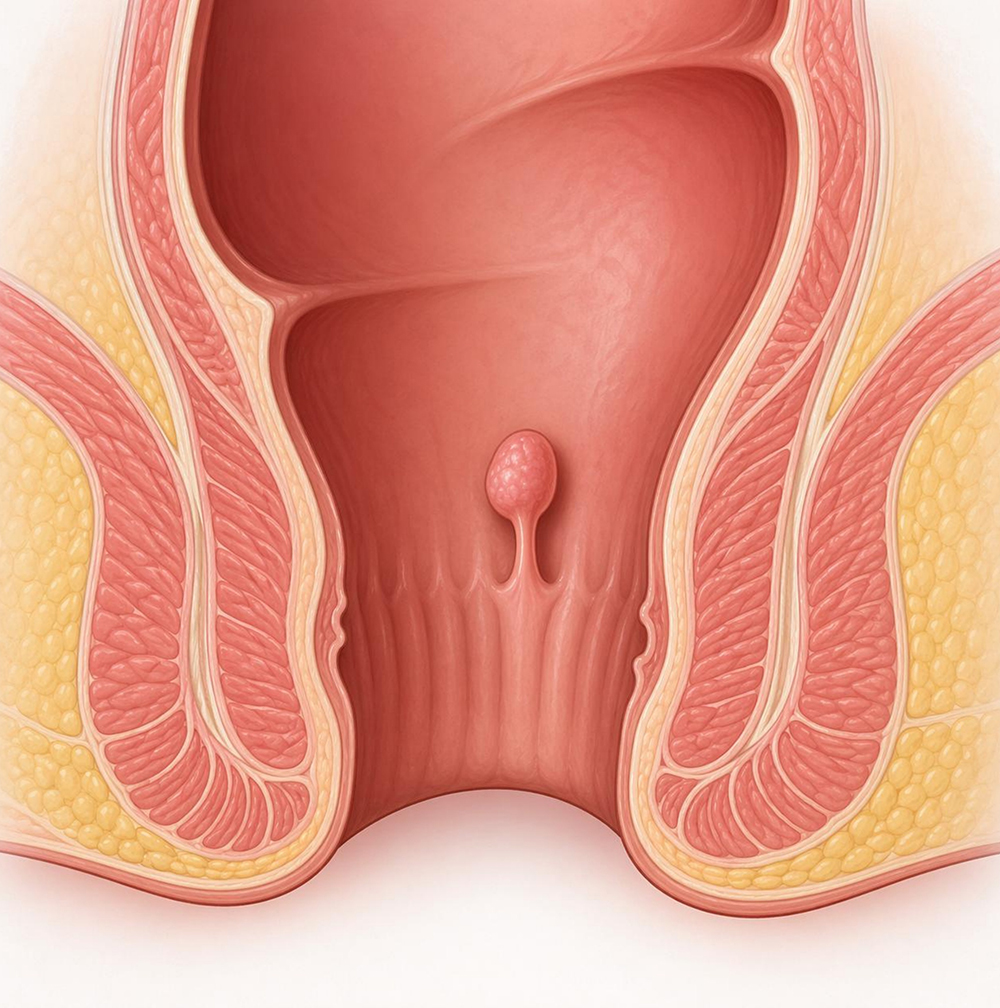
The diagnosis is established based on clinical findings – by performing a digital rectal examination and proctoscopy (instrumental examination). The final diagnosis (type of polyp) is established after histological (microscopic) examination of the polyp, which is performed after its surgical removal.
Polyps of the anal canal may cause complications related to their location or size – fecal incontinence, pain (if inflammation has developed), bowel movement disorders.
Although most anal canal polyps are benign, adenomatous polyps nevertheless carry a risk of malignant transformation (Figure 2).
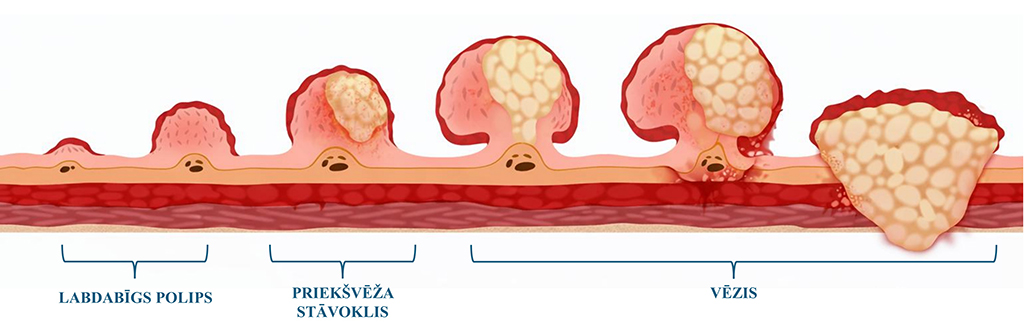
Very small polyps (<5mm) may be observed by performing regular proctoscopy 1x per year. In other cases, surgical removal of the polyp, or polypectomy, is nevertheless recommended. The operation is performed using a perineal approach – this can be provided for polyps located up to 8cm from the anal verge. Polyps located higher require endoscopic treatment. After surgery, histological evaluation of the polyp is important, as it may influence the subsequent observation or treatment plan.









CALL US:
+371 26 412 412WHATSAPP:
+371 26 412 412Consultation with an experienced doctor is the first step towards taking care of your health and well-being.
SEND US A MESSAGE