
Gallbladder polyps are small formations of the gallbladder mucosa (inner wall) (Figure 1).
They are divided into two main categories:
The prevalence of gallbladder polyps is up to 10% of cases. Most commonly, they are detected incidentally during ultrasonography, because they do not cause complaints in everyday life.
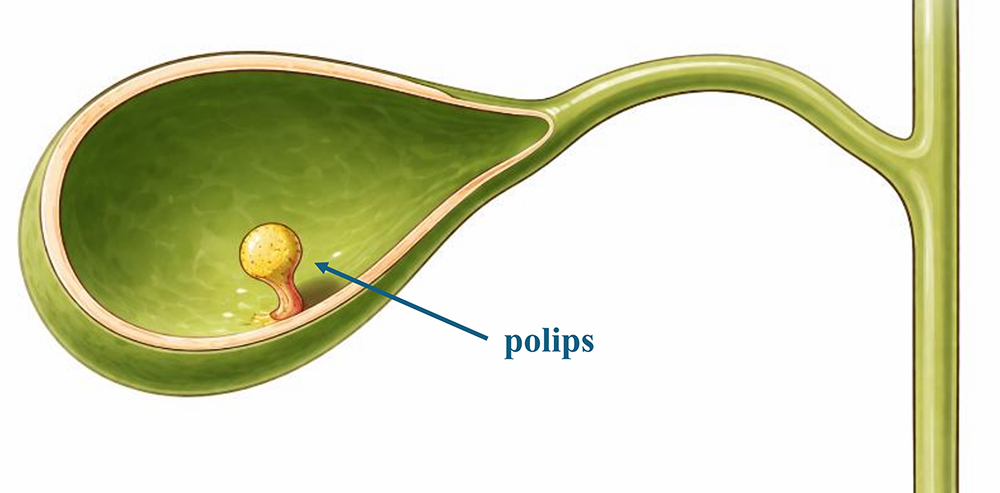
The causes of gallbladder polyp formation are not always completely clear and depend on the type of polyp (neoplastic or non-neoplastic). The main risk factors for the development of gallbladder polyps are: age over 50 years, obesity, diabetes mellitus, dyslipidemia (cholesterol metabolism disorders), chronic irritation of the gallbladder wall (impaired bile flow or altered bile composition). The risk of polyp formation is also influenced by heredity (genetic mutations).
The diagnostic standard for gallbladder polyps is abdominal ultrasonography (US), which is a minimally invasive, safe, and sensitive method. The diagnosis of a gallbladder polyp can be made with sufficient reliability based on characteristic US features. However, imaging cannot unequivocally distinguish malignant polyps from benign ones. In cases where surgical treatment is indicated, the final diagnosis of a gallbladder polyp (benign or malignant) is established by histological examination (microscopic examination of gallbladder tissue).
Most commonly, gallbladder polyps do not cause complaints; however, in some patients the symptoms may be similar to those of gallstone disease - periodic pain or discomfort in the right upper quadrant or upper abdomen is characteristic, associated with impaired bile outflow from the gallbladder during its contraction.
The observation and treatment plan is determined by the size of the polyp, the symptoms associated with it, and the patient's individual risk factors.
If the polyp is ≤5mm in size and the patient has no risk factors, observation is not necessary. If the polyp is ≤5mm in size and the patient has risk factors, or if the polyp is 6-9mm in size, dynamic observation is required by performing repeated US examinations at a specified time interval.
Surgical treatment is indicated in cases where any of the previously listed risk factors for polyp malignancy are identified, it causes complaints (biliary colic), or concomitant gallstone disease is present.
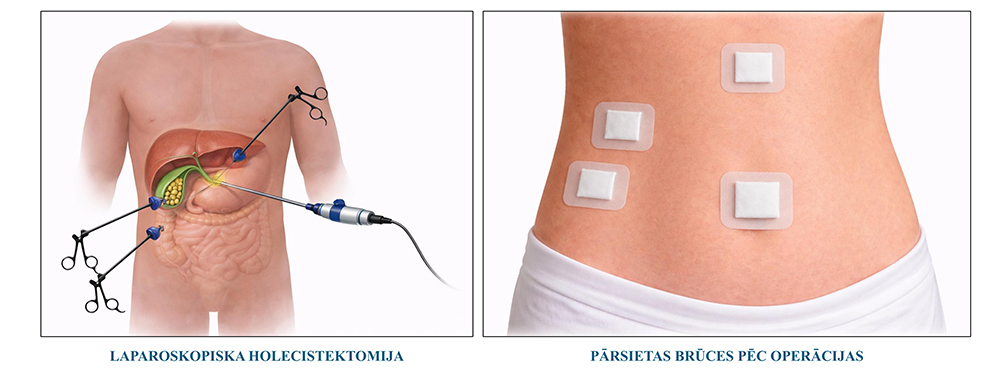
Surgical treatment for gallbladder polyps is laparoscopic cholecystectomy (removal of the gallbladder). The operation is performed under general anesthesia in a minimally invasive manner. During the procedure, an optical instrument is inserted into the abdominal cavity to visualize the organs, and the operation is performed through additional incisions (Figure 2). The main function of the gallbladder is to concentrate and store bile, which is released during meals; however, it is not considered a vital organ because the bile ducts continue to perform their function after its removal. In 10-25% of cases, so-called postcholecystectomy syndrome may develop, characterized by gastrointestinal symptoms of varying severity (nausea, burning sensation or periodic abdominal pain, flatulence, loose stools, intolerance to fatty foods). However, pronounced complaints affecting quality of life develop in only ~2% of cases.











CALL US:
+371 26 412 412WHATSAPP:
+371 26 412 412
If you have been diagnosed at another clinic, call us to book a preoperative consultation –
we will offer you the earliest available appointment.
SEND US A MESSAGE