
An abdominal wall hernia is a pathological condition in which internal organs (most often intestine or adipose tissue) protrude through an abdominal wall defect (Figure 1). This bulge may be visible or palpable as a subcutaneous mass. The most common hernias are inguinal, umbilical, epigastric and incisional. Other, less common locations also occur, but all are essentially abdominal wall defects.
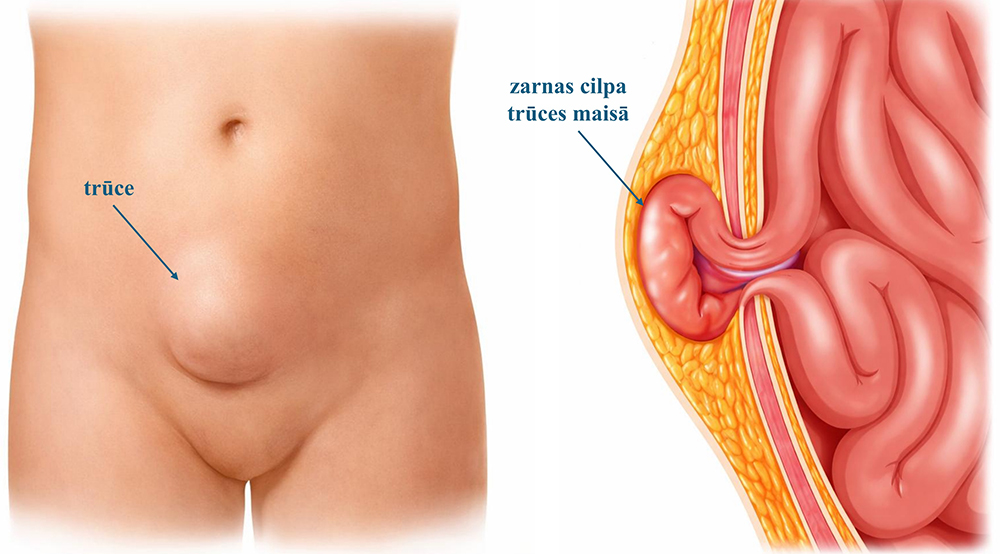
Hernia development is promoted by a combination of two factors:
Diagnosis can often be made during physical examination: abdominal wall defects can be palpated in different positions (lying and standing) and during provocation tests (e.g., coughing). To clarify hernia contents and size, ultrasonography (US) is performed. In complex cases (incisional hernia or a small hernia not detected on examination), computed tomography (CT) or magnetic resonance imaging (MRI) is used.
Hernia symptoms vary; most often they include a visible or palpable bulge of the anterior abdominal wall, discomfort or pain (especially during exertion), and abdominal heaviness. They worsen when standing, straining or coughing. A small hernia may initially be asymptomatic.
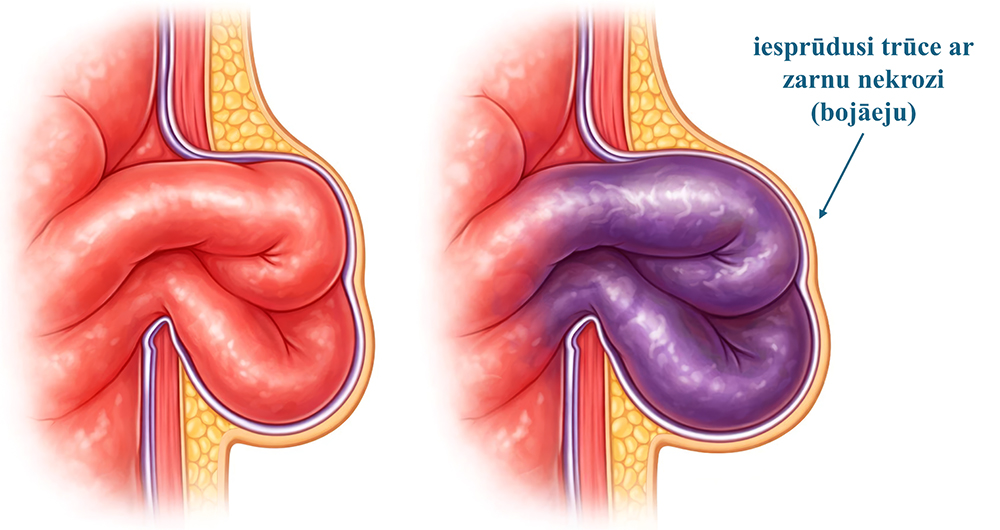
The main possible complication is incarceration (entrapment): structures in the hernia sac (bowel loops, adipose tissue) are compressed, blood supply is impaired and tissue necrosis develops (Figure 2). Hernia incarceration is an emergency requiring urgent medical care.
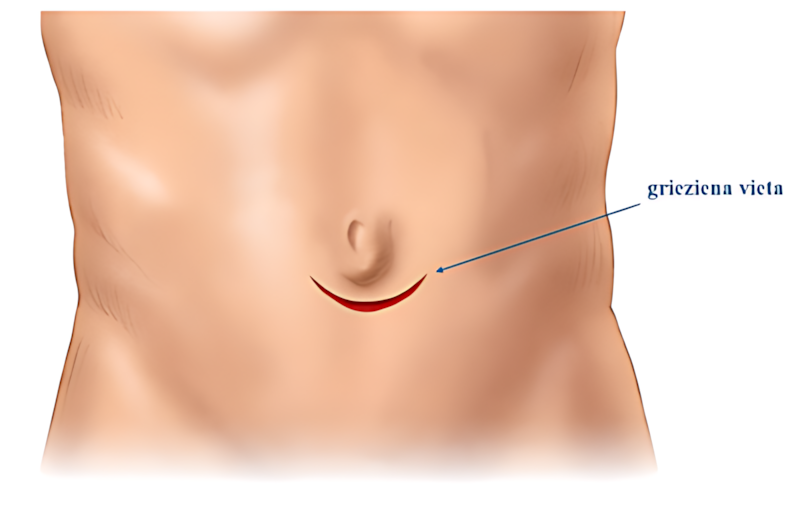
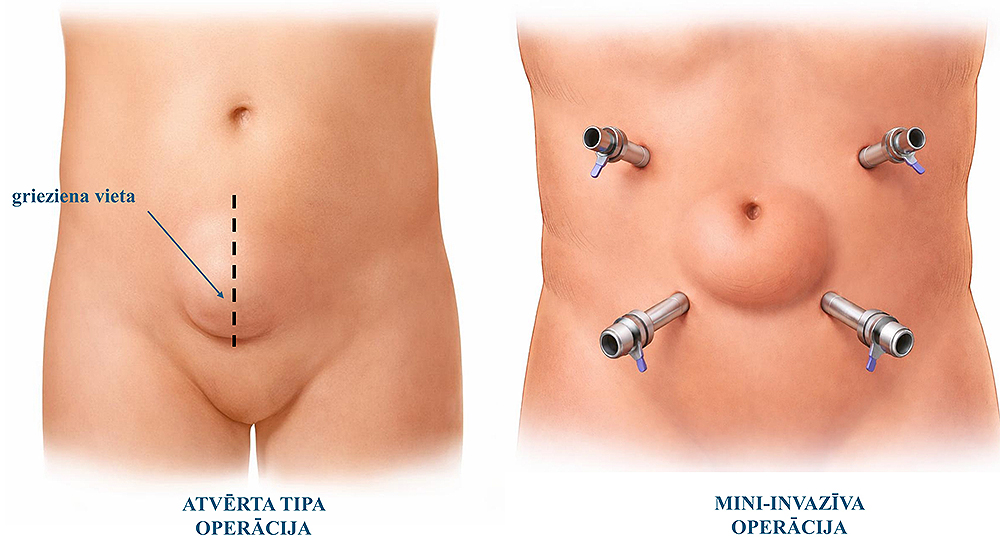
The only treatment is surgical. The operation is performed minimally invasively (laparoscopically or endoscopically) or traditionally (open surgery). A synthetic mesh is often used to close the defect and reinforce the abdominal wall (Figure 3).












CALL US:
+371 26 412 412WHATSAPP:
+371 26 412 412
If you have been diagnosed at another clinic, call us to book a preoperative consultation –
we will offer you the earliest available appointment.
SEND US A MESSAGE