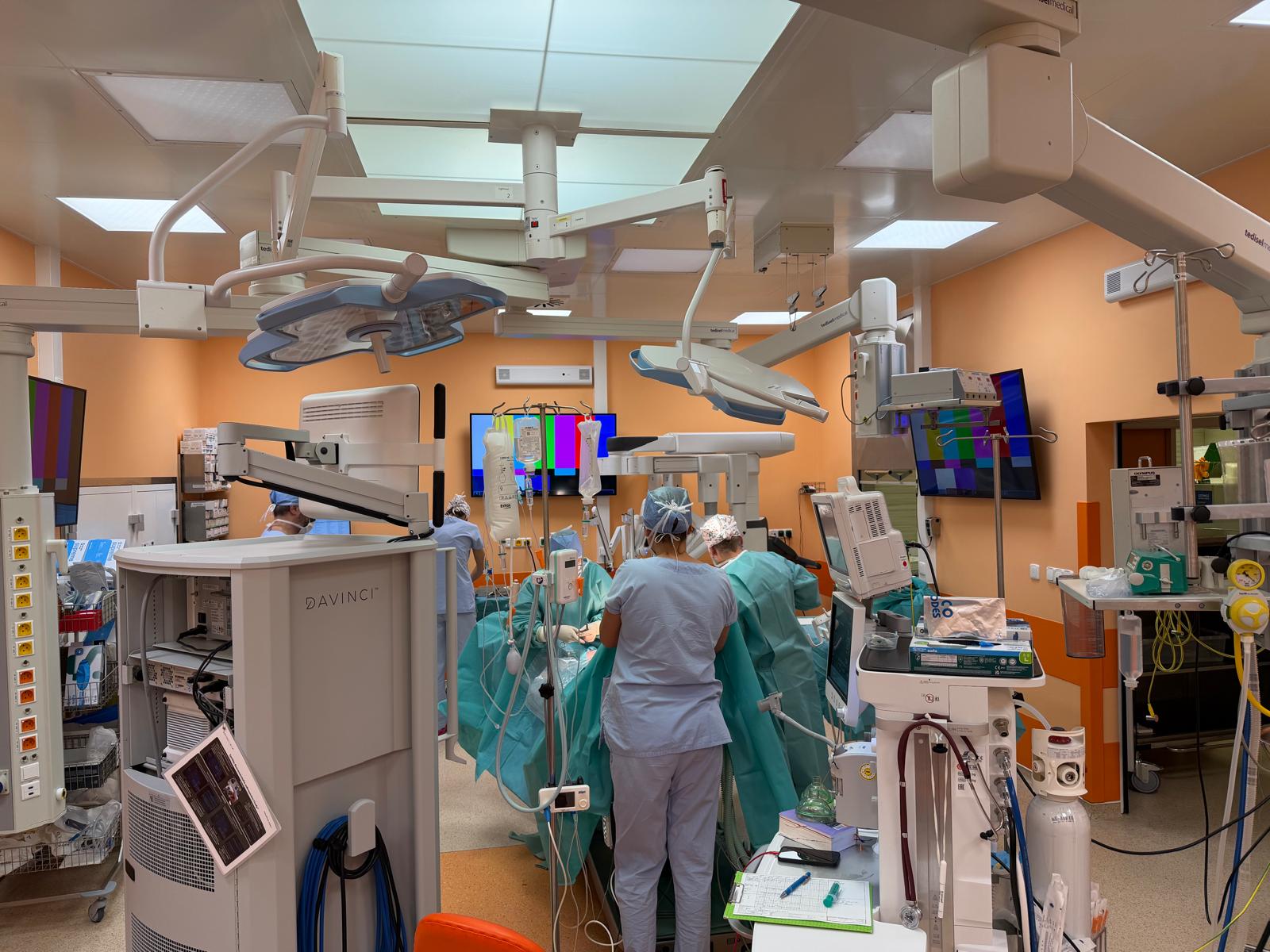
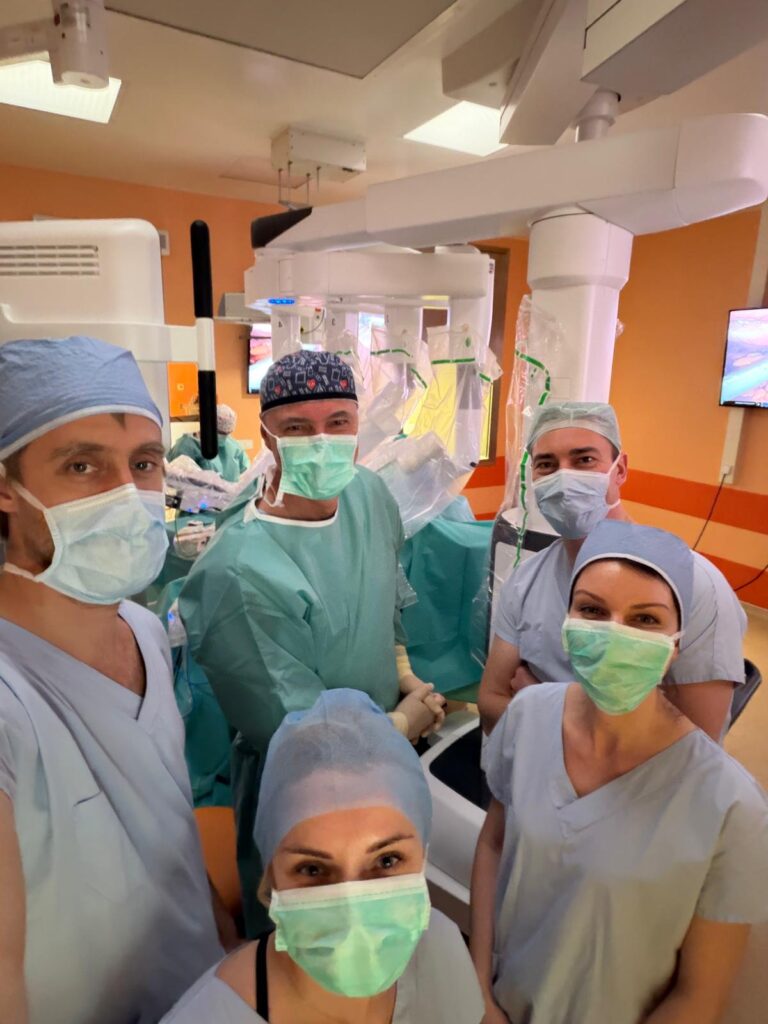
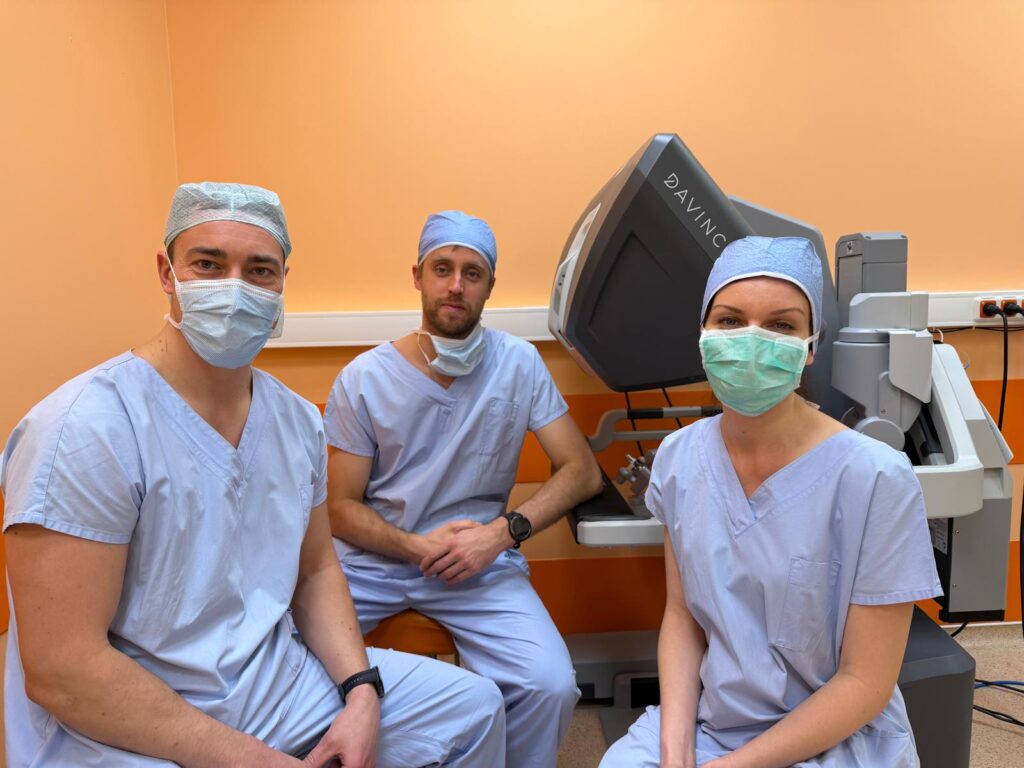
Specialists from Vītola klīnika – Dr. Antons Babuškins, Dr. Elīna Sedleniece and Dr. Jurģis Vītols have returned from Pilsen, Czech Republic, where they spent two days learning about the possibilities of robotic surgery in gynecology.
During the visit, they observed robotic surgeries for endometriosis, uterine fibroids, pelvic organ prolapse and endometrial cancer performed by Professors Jiri Presl and Vladimir Kalis. As Dr. Jurģis Vītols notes, the experience was very interesting, as hands-on observation can never be compared to what one can learn at congresses or large-scale seminars. Being the only participants means having the opportunity to ask more – and more personal, sometimes even challenging but important questions in order to truly understand how new devices are used in real clinical practice.
We are always looking for the most precise, safest and best solutions with the main goal of providing the highest quality and most individualized care to every patient.
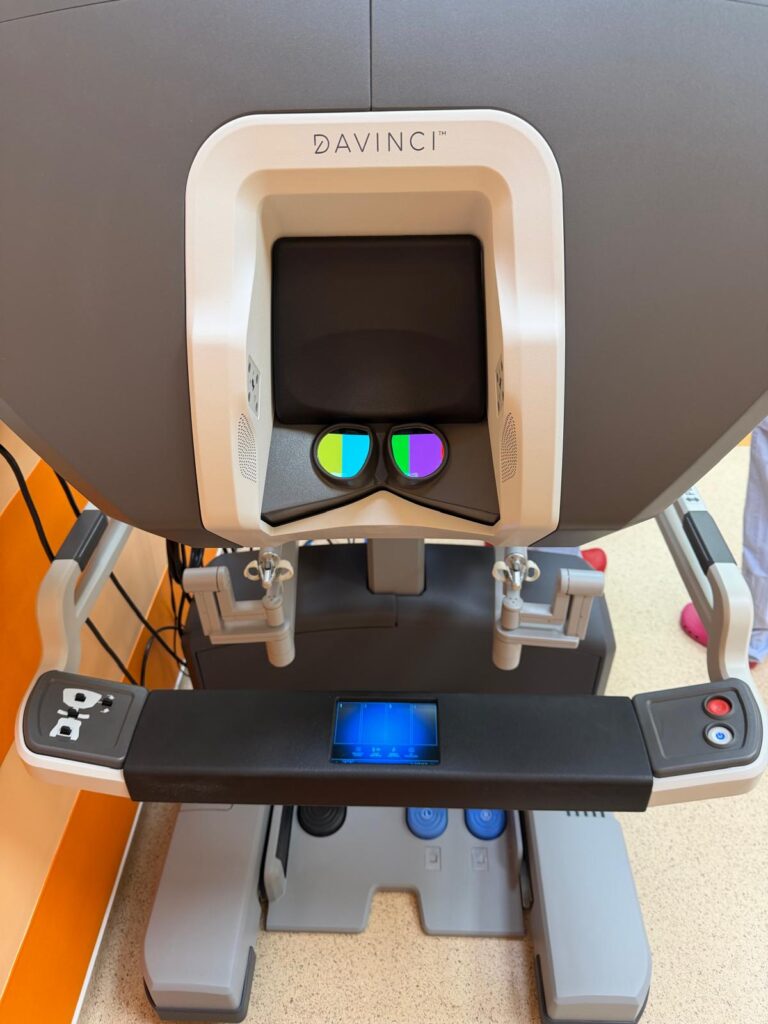
Robotic surgery is not something completely new. The first surgical robot in the United States was used back in 2000, and in 2014 the now-popular Da Vinci Xi was introduced. “An interesting point is that this type of surgery, in certain cases, benefits not only the patient but also the surgeon by improving work ergonomics. And yes, the robot does not operate on its own – it is controlled by a human. So, as everywhere, quality still depends on the surgeon’s knowledge, precision, responsibility and work ethic. A real benefit or just a toy? A serious matter to think about,” says Dr. Vītols.









CALL US:
+371 26 412 412WHATSAPP:
+371 26 412 412Consultation with an experienced doctor is the first step towards taking care of your health and well-being.
SEND US A MESSAGE